01
I lead from strategy through delivery
I set direction and boundaries, work through technical and delivery constraints, make the necessary tradeoffs, and stay involved through implementation.
I lead products in messy environments—specialized work, constrained teams, changing organizations—with no clean separation between setting direction and getting the product built.
My product career has been shaped by expanding scope. At Amplio, I went from building a content development function to leading three products and two development teams as VP Product. Since then, I’ve co-founded Accord and independently built Arc.
I lead with clear ownership, make the rationale and tradeoffs behind product decisions clear, and create room for collaborators’ expertise to shape the product.
I set direction and boundaries, work through technical and delivery constraints, make the necessary tradeoffs, and stay involved through implementation.
I make roles, priorities, and decision-making clear, share the reasoning behind product choices, and create room for collaborators to contribute their expertise.
I use research, regulation, and clinical practice to shape product structure, workflows, and decisions.
My goal is to make product decisions by understanding the broader responsibility behind a task and matching each part of the problem to the method best suited to it.
I look beyond the individual task to the broader responsibility the user has to fulfill, then shape the product around what that requires.
I separate complex problems into parts, then use deterministic methods, AI, and expert judgment where each is best suited.
The product was centered on therapy and materials for individual students. But SLPs were responsible for managing an entire caseload: documenting sessions, reviewing progress across students, and scheduling recurring groups. I shifted the product toward those caseload-level responsibilities, which led to simpler documentation, caseload-wide reporting, and a calendar.
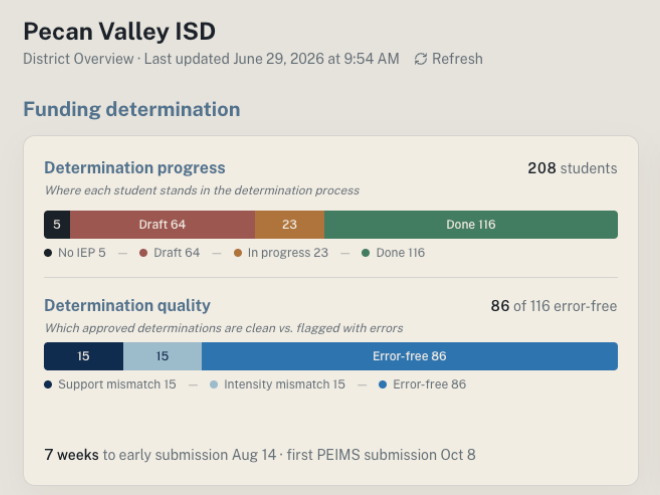
Texas introduced a new way to determine special-education funding, but the state’s tools supported one student at a time. Districts were responsible for completing those determinations across their entire special-education population. I shaped Accord around dividing the work, reviewing results, handling cases that needed more attention, and bringing the outcomes together at the district level.
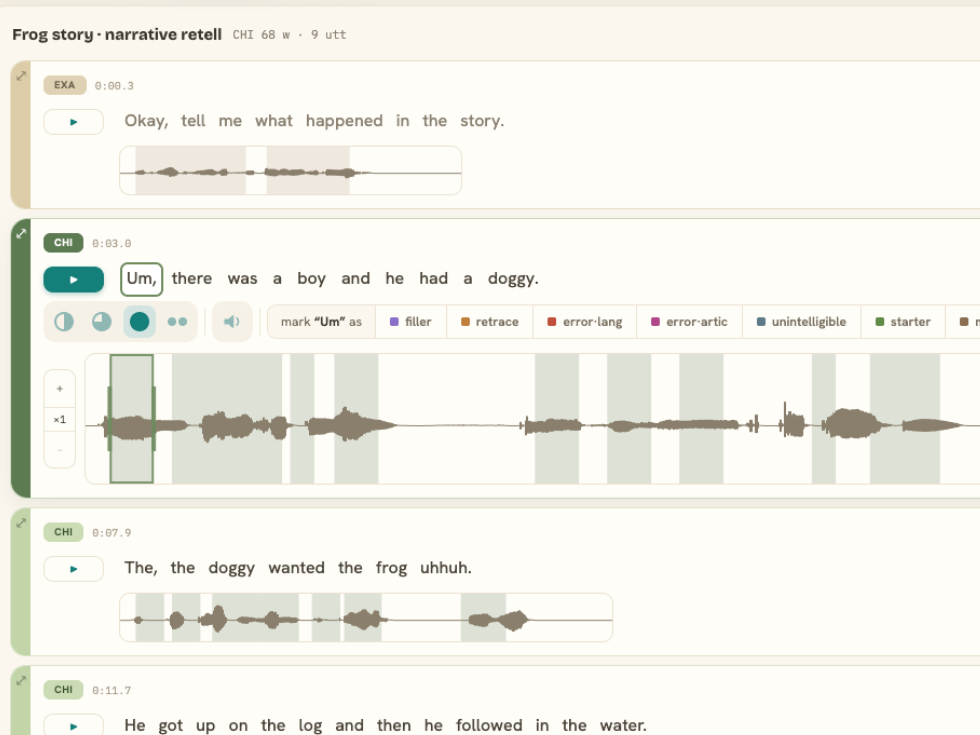
Most language-sampling tools become useful only after a transcript exists. But creating an accurate transcript from a recording is itself a substantial part of the clinician’s job. Arc reduces that burden by using AI transcription as a starting point, then giving clinicians tools to review, correct, and complete the transcript against the recording.
Developing speech-language content at scale with a small team required different production methods for different kinds of content. I developed deterministic generators for rule-bound content such as articulation exercises, and generative-AI workflows for language content that benefited from more open-ended generation. The team could then spend more of its time reviewing, correcting, and improving output instead of creating every item from scratch.
Funding determinations depend on information buried in a student’s IEP and on a rubric with explicit rules. AI extracts and structures the source document, deterministic logic applies the state rubric, and the user reviews the proposed determination alongside the supporting evidence.
Language sampling combines tasks that call for different kinds of support. Arc uses AI transcription to create a starting point, deterministic language-processing methods for measures that can be calculated reliably, and clinician judgment to correct the transcript and make interpretations that depend on what was actually said.
These three chapters trace how my scope expanded: leading products inside an organization, building one from scratch, and taking one on independently.
Amplio is where my scope grew from clinical and instructional work into product and portfolio leadership. As VP Product, I ultimately led Speech & Language, Reading Intervention, and eSpark, working directly with two development teams through major organizational change.
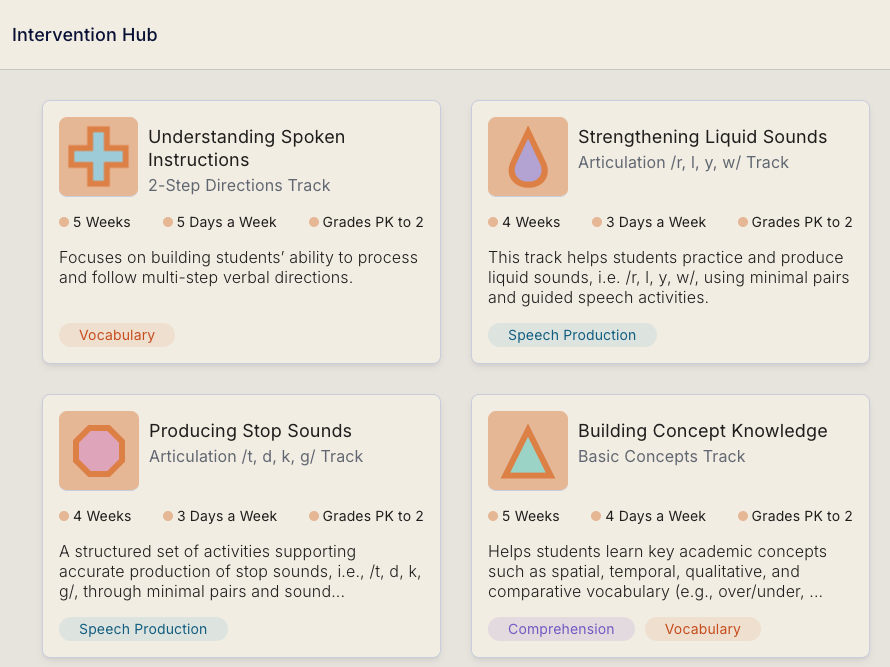
Accord gave me the chance to take a product from an ambiguous policy opportunity to a working application. I defined the product from scratch and got much closer to the build itself, using current AI tools to prototype, design, test, and implement at the application level.
Arc is where I’m bringing those pieces together independently: product leadership, research, design, hands-on building, and speech-language expertise. I identified a problem I’m unusually well equipped to understand and am taking it from clinical need to working product myself.
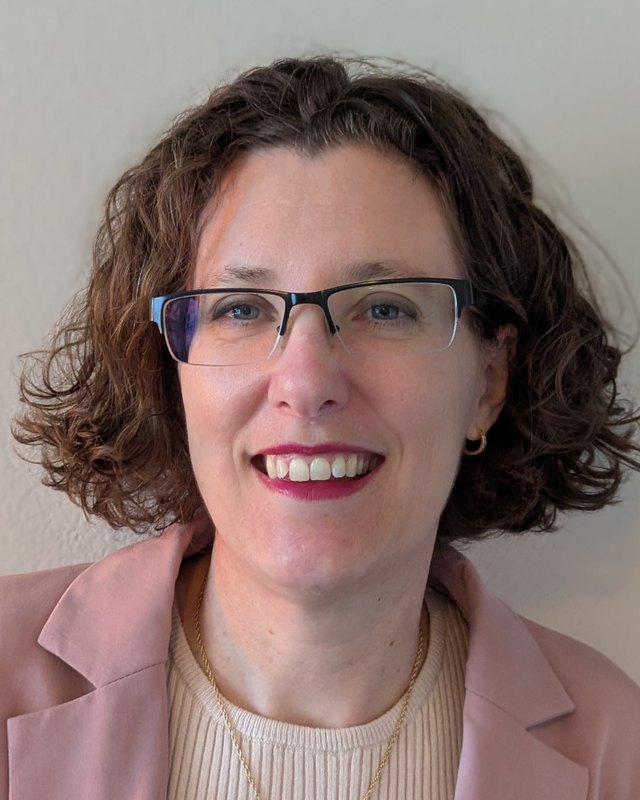
I’m looking for my next product leadership role.
In my free time, I’m building Arc because language sampling is an itchy problem and apparently I have weird hobbies. Those hobbies also include arguing with AI about whether a sentence is true or whether the AI is merely pleased with itself for having written it. Looking at you, Claude.
Away from the computer, I’m the caretaker of Zeb, my charismatic beast who I’ve accidentally trained to find dog people on our walks around town.
If you’d like to talk: hello@melissarajaram.com.